Most water treatment systems are designed to be quiet workers. You install the equipment, set it up, and expect it to do its job without demanding much attention.
Then one morning, something changes.
The water pressure seems lower. Your softener isn’t regenerating when it should. The drinking water tastes different. Maybe there’s a warning light blinking that you don’t remember seeing before. And suddenly, that appliance tucked away in the basement or under the kitchen sink has become the most interesting thing in the house.
Don’t panic. Many water treatment problems have fairly simple explanations. Before assuming the equipment needs replacing, a little investigation can often reveal what’s actually happening.
Start by Describing the Problem
Good system troubleshooting begins with one basic question: what changed?
Was the water quality different yesterday, or has the problem been developing for months? Is the issue affecting every faucet or just one? Did it begin after a power outage, plumbing repair, filter replacement, or change in water usage?
These details matter.
For example, low pressure at one faucet may point toward a clogged aerator rather than a filtration problem. Reduced flow throughout the home could suggest a clogged filter or another plumbing issue.
Likewise, a softener that suddenly produces hard water might have an empty salt tank, an incorrect setting, or a mechanical problem.
Try not to jump straight to the worst-case scenario. Start with what you can observe.
Check the Simple Things First
It sounds obvious, but simple checks are often skipped.
Look at the system’s power supply if it requires electricity. Check whether valves are positioned correctly. If you have a salt-based softener, see whether there is enough salt in the brine tank.
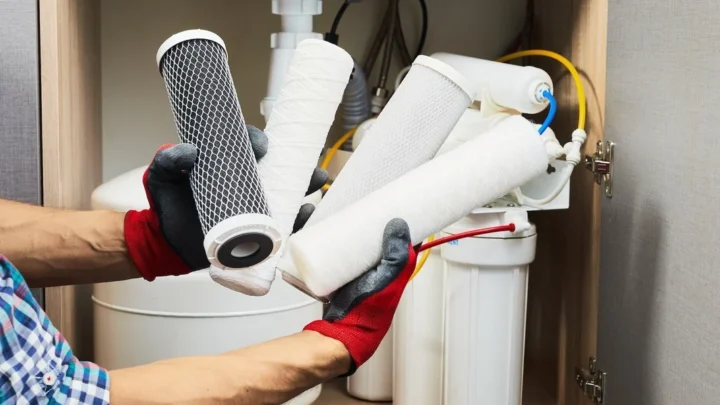
For filtration systems, inspect the filter housing if it can be safely accessed. A heavily loaded sediment cartridge may explain a sudden drop in water flow.
Also check for visible leaks around connections and fittings.
None of these steps requires you to become a plumbing expert. You’re simply gathering clues.
If you find something unusual, don’t force a component or start disassembling the system without knowing what you’re doing. Water pressure and electrical connections aren’t areas where guesswork is especially helpful.
Settings Can Quietly Cause Problems
Modern treatment equipment often has digital controls, automatic regeneration schedules, flow sensors, or other programmable features.
Those features are convenient, but incorrect settings can affect performance.
A softener programmed for the wrong household size may regenerate too often or not often enough. A system with an incorrect hardness setting may fail to provide the expected results.
That’s why efficiency checks and settings adjustments can be an important part of routine service. Sometimes the equipment itself is perfectly healthy; it simply isn’t configured for the home’s current water usage.
Households change. People move in or out. Water consumption rises or falls. A system installed years ago may still be using settings that made sense at the time.
A quick review can sometimes make a surprising difference.
Don’t Forget Filters
Filters have a limited working life.
As they collect sediment, chlorine-related compounds, or other substances, they eventually become less effective. A clogged filter can also restrict water flow.
If you don’t remember when your filter was last replaced, that’s worth investigating.
Look at the manufacturer’s recommended replacement interval, but keep in mind that actual lifespan depends on incoming water quality and household usage. A home with heavy sediment may go through filters much faster than one with relatively clean source water.
When replacing a cartridge, make sure the replacement is compatible with your specific system. A filter that physically fits isn’t necessarily the right filter.
And after installation, check for leaks carefully.
Water Softeners Need Their Own Troubleshooting Approach
If you have a water softener, the first thing to check is usually the basics: salt supply, control settings, and regeneration history.
If the system has enough salt but the water still feels hard, there could be an issue with the regeneration cycle, resin bed, valve assembly, or another internal component.
Salt bridges can also create confusion. From the outside, the tank may appear full, but the salt can form a hardened layer that prevents proper operation.
Again, don’t start poking around aggressively. Some issues are simple, but others require proper diagnosis.
Reverse Osmosis Problems Can Be Sneaky
RO systems can develop issues that aren’t immediately obvious.
A slow drinking-water faucet may indicate a clogged filter, low tank pressure, membrane problems, or another restriction. Changes in taste can also indicate that a filter is overdue for replacement.
If the system is producing much less water than usual, check the manufacturer’s troubleshooting guidance before replacing expensive components.
It’s also important to remember that RO systems have several stages, and each one can affect the final result.
Replacing every component simply because the water tastes different can become unnecessarily expensive. Diagnose first.
When the Original Dealer Is No Longer Available
What happens when your system was installed by a company that no longer services it?
It happens more often than people expect. Businesses close, change ownership, stop servicing certain brands, or simply aren’t available in your area anymore.
That doesn’t necessarily mean you’re stuck with an unsupported system.
Experienced water-treatment professionals may offer help with systems from other brands or old dealers, depending on the equipment and availability of replacement parts.
Before calling, gather as much information as possible. Take photos of the system, control panel, labels, model numbers, and plumbing connections.
The more information you provide, the easier it is for a technician to determine what they’re dealing with.
When a Professional Should Step In
There are limits to DIY troubleshooting.
Persistent leaks, electrical problems, unusual noises, pressure issues, unexplained changes in water quality, or repeated system failures deserve professional attention.
The same goes for equipment that requires specialized tools or programming.
Trying to save a service fee by experimenting with unfamiliar equipment can sometimes create a much bigger repair bill.
A good technician should explain the problem in plain language, identify the likely cause, and give you options rather than immediately pushing for replacement.
Repair or Replace?
This is often the question homeowners really want answered.
If a system has a failed valve or worn component, repair may be perfectly sensible. If the equipment is extremely old, inefficient, difficult to service, and repeatedly failing, replacement may make more financial sense.
Consider the age of the system, repair history, availability of parts, operating costs, and expected future performance.
Don’t let one broken component automatically convince you that everything needs to go.
A Calm Approach Usually Wins
Water treatment problems can feel complicated because the equipment isn’t always familiar. But troubleshooting doesn’t have to begin with panic or a replacement quote.
Start with what changed. Check the obvious things. Review filters and settings. Look for leaks. Consider recent changes in water usage or plumbing.
If the issue persists, get professional help.
The best outcome isn’t always a brand-new system. Sometimes it’s a five-minute adjustment, a replacement cartridge, or a simple repair that brings everything back to normal.
And when you understand how your equipment works — even just the basics — those unexpected water problems become a lot less intimidating.